Jill Arcaro
Viajes transformadores · Nepal

Nepal: aprender, vivir y viajar de otra manera

Un mes en Boudhanath y un viaje lleno de encuentros inesperados
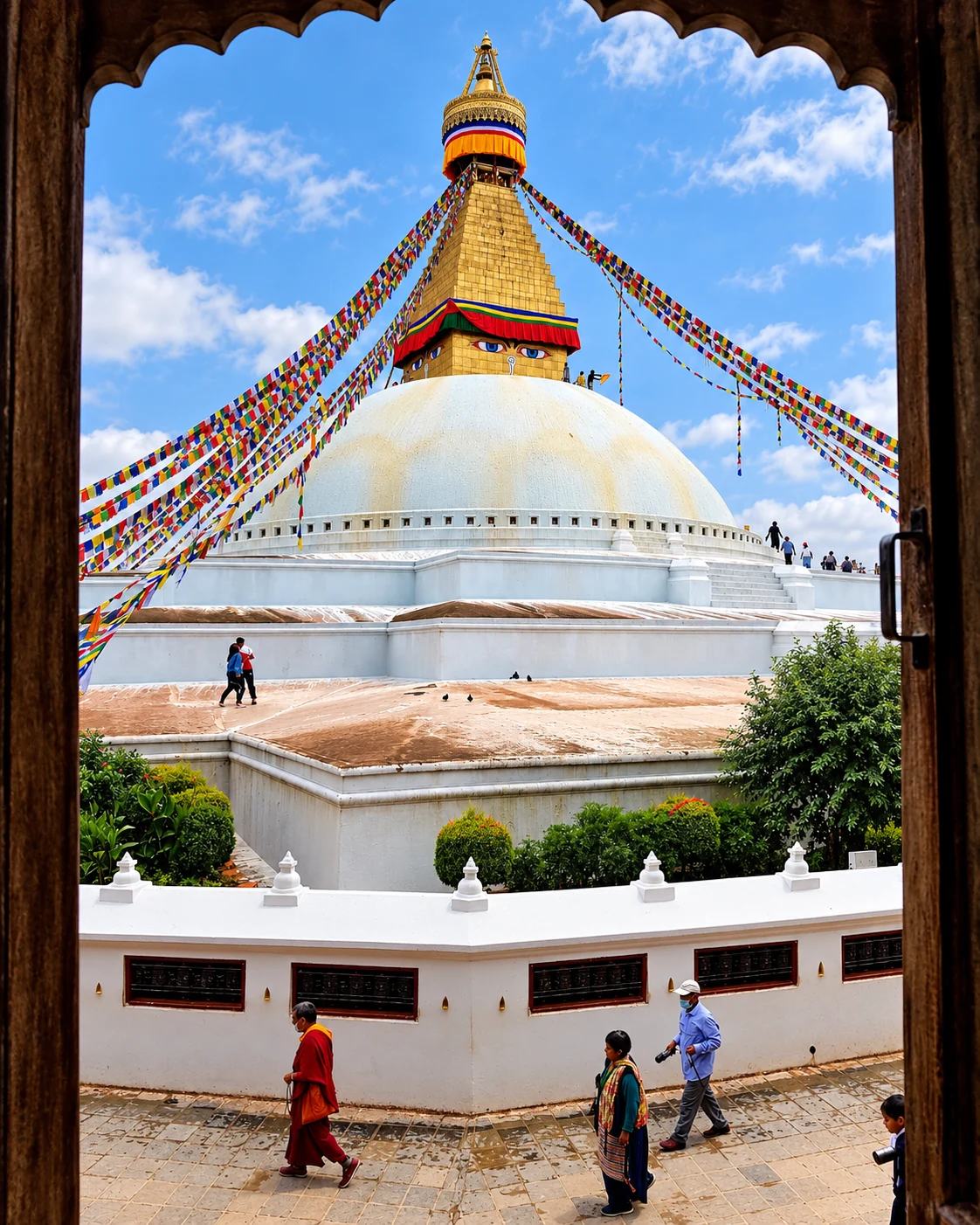
Boudhanath de día, encuadrada por la ventana desde un edificio cercano. Nepal, 2018.

Mi fórmula personal para viajar seis meses al año

Una de mis pasiones es el turismo educativo y transformacional. Desde hace años viajo aproximadamente seis meses al año, siguiendo una fórmula personal que me permite mantenerme económicamente durante mis viajes: gastar lo mismo, o incluso menos, que cuando estoy en casa.

Mi secreto consiste en vivir modestamente, cerca de la gente local, y realizar estancias relativamente largas. En aquella época, me fijaba un presupuesto de unos 400 dólares mensuales para el alojamiento y negociaba el alquiler en función de la duración de mi estancia.

Una vez instalada, me dedico a estudiar o a impartir cursos en los que se aprende principalmente haciendo, sin necesidad de grandes esfuerzos académicos: baile, masaje, yoga, cocina, medicina natural, taichí, idiomas… Y, de paso, casi sin proponérmelo, hago algo de turismo cultural.

Para mí, viajar no consiste simplemente en visitar lugares, sino en aprender a través de la práctica, conviviendo con la gente local y descubriendo otras maneras de pensar y de vivir. A lo largo de mis viajes he hecho pocos amigos, pero buenos, y de ellos he aprendido muchísimo: su manera de ver y vivir las cosas, sus historias, sus costumbres y también sus conocimientos prácticos sobre dónde ir, dónde comprar, qué comer y cómo desenvolverse en la vida cotidiana. Hablar el idioma, o al menos intentar aprenderlo, siempre me ha ayudado a establecer esas relaciones.

Por eso prefiero las estancias largas. La verdadera inmersión cultural requiere tiempo, curiosidad y disposición para superar las primeras dificultades. No basta con decir que queremos integrarnos: hay que estar dispuestos a enfrentarse a formas de vida que pueden resultarnos extrañas e incluso intimidantes al principio. Pero cuando conseguimos superar esa barrera, se abre un mundo de experiencias y aprendizajes que difícilmente podemos alcanzar con una visita turística convencional.

En el verano y otoño de 2018 estuve en Tailandia, India y Nepal. Mi estancia en Nepal, durante septiembre, surgió de manera inesperada, casi improvisada, y terminó convirtiéndose en un buen ejemplo de cómo funciona mi particular manera de viajar.

Cuando escribí el artículo original, en febrero de 2019, me encontraba en Cuba, invitada por la Cátedra Terapéutica de la OMAM (Organización Mundial de Artes Marciales), impartiendo dos cursos de masaje tailandés a 35 profesionales y estudiantes.

Pero cuando no estoy trabajando, suelo elegir países del Sudeste Asiático o de América Latina, donde, en aquellos años, podía vivir más económicamente que en Europa o Estados Unidos.

Nepal: un destino inesperado

Nepal es un país que no defrauda. Me llevé grabadas en la retina muchas imágenes y experiencias que, hasta entonces, nunca me habían llamado especialmente la atención, siendo el mundo tan amplio y fascinante como es.

Ver álbum de fotografías de viajes →

En septiembre de 2018 me encontraba en Rishikesh, India, haciendo un curso de Ayurveda, cuando tuve que salir del país por cuestiones de visado. Nepal era el destino más cercano y, como si se tratara de una señal, todo se combinó de manera estupenda para hacer posible el viaje. Así que me fui para allá. Saqué el visado en el aeropuerto.

Irónicamente, no soy la típica turista de trekking, ni tampoco mochilera. ¡Muy lejos de eso! De hecho, nací en California, donde se conduce hasta para ir a la esquina, y no me gusta especialmente andar.

Suelo viajar sola a lugares lejanos de mi casa en Madrid, para realizar estancias largas, de por lo menos un mes. Soy una viajera independiente, un poco nómada digital, profesora de masaje tailandés y empresaria de viajes educativos…, entre otras cosas.

Por aquel entonces llevaba ya diez años viajando aproximadamente seis meses al año, y Nepal se convirtió en el país número 42 que visitaba.

Aunque valoro mucho los aspectos materiales —la belleza, la comodidad, la limpieza—, siento también una fuerte atracción por lo intelectual y lo espiritual. Digamos que busco las realidades que se esconden detrás de las apariencias.

En Nepal encontré aventuras, belleza y profundidad por todas partes. Pero ¡ay!, para visitar este país hay que estar en buena forma física y dispuesto a la aventura. ¡Incluso caminar o cruzar la calle puede convertirse en toda una experiencia! ¡Ja, ja, ja!

Me han preguntado si recomendaría Nepal para viajar con niños. Mi respuesta, basada en lo que viví entonces, es que no. ¡Definitivamente, no!

Kathmandu: entre la espiritualidad y el caos cotidiano

En Kathmandu, la capital, la espiritualidad destaca en todo lo que te rodea. Es increíble porque, en Occidente, parece que a veces negamos que sea siquiera una faceta de la humanidad. Allí, en cambio, se respira esa energía aunque no seas una persona ni remotamente religiosa.

Pero, por otro lado, el día a día puede ser difícil y, como dice el refrán, «no es oro todo lo que reluce».

Nepal es un país de grandes contrastes y de una extraordinaria mezcla de culturas, entre ellas la nepalí, la tibetana y la newari. Me llamó mucho la atención el caos del tráfico en Kathmandu. Apenas encontraba señales de tráfico, muchas calles carecían de nombres visibles y las aceras eran prácticamente inexistentes. Al principio, la circulación me parecía tan caótica que llegué a preguntarle al conductor por qué lado de la calle se conducía.

Las calles parecían haber sufrido los efectos de una bomba o, más acorde con la realidad del país, de un terremoto. Había caminos pedregosos, tramos apenas asfaltados, baches, charcos, barro y polvo por todas partes. La lluvia convertía algunas zonas en barrizales y, cuando todo se secaba, volvía el polvo. Caminar, cruzar una calle o simplemente desplazarse por la ciudad podía convertirse en toda una aventura.

Y, sin embargo, en medio de estas dificultades aparecían sorpresas extraordinarias.

Me impresionó encontrar tantos automóviles y motocicletas, televisores de pantalla plana, teléfonos móviles de última generación, copisterías y pequeños comercios. Y, para colmo, ¡hasta fui a un restaurante atendido por robots de fabricación nepalí!
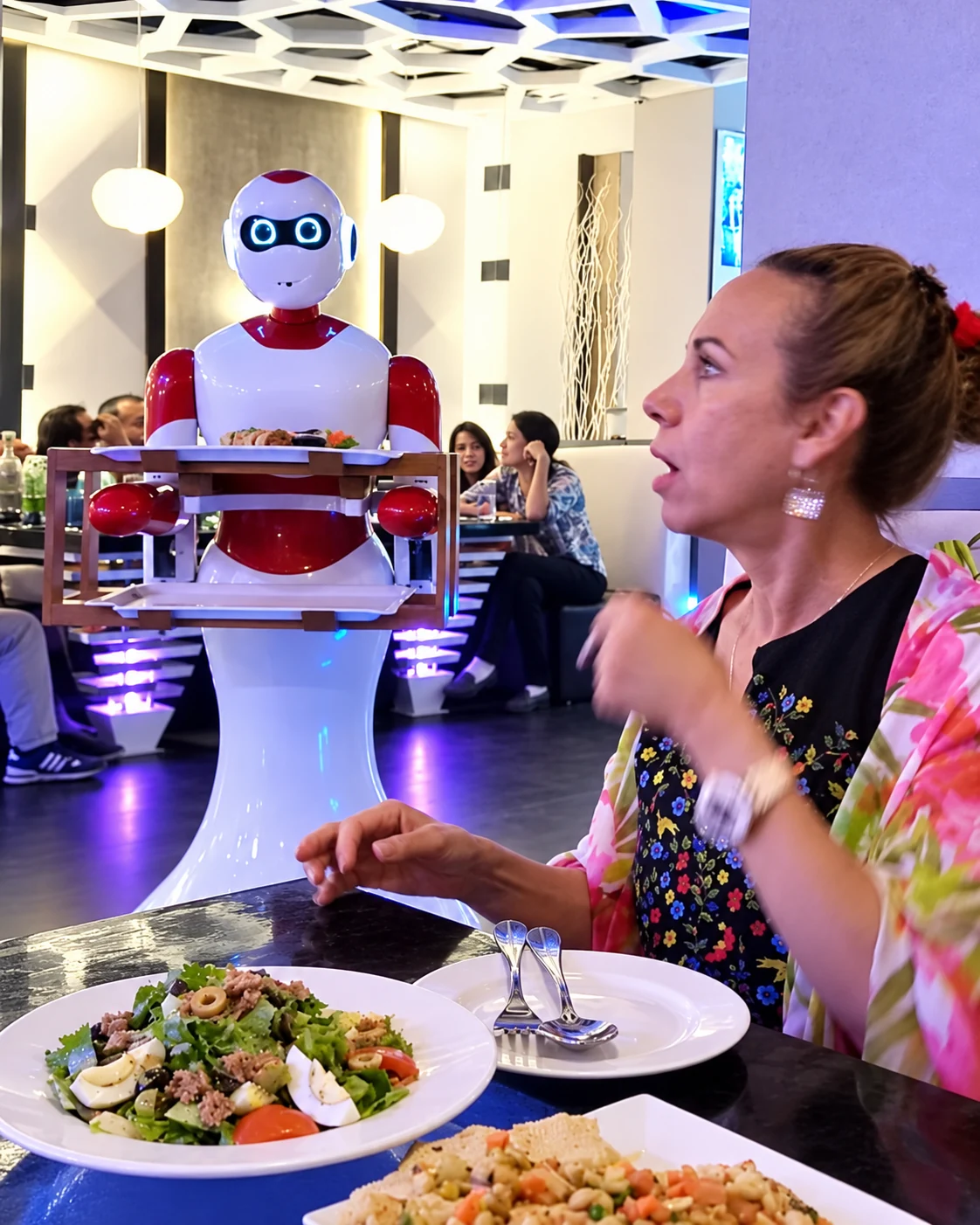
Mi encuentro con un robot camarero en Naulo Restaurant, Kathmandu, 2018. Fotografía recuperada de una captura original.

¡Y pensar que, entre tantos baches, barro y polvo, también se fabricaban robots!

Boudhanath: vivir dentro de otra cultura

Mi llegada a Kathmandu no fue precisamente maravillosa. Había reservado por Internet un alojamiento en Thamel, el barrio turístico de la ciudad, pero al llegar me encontré con un lugar bastante desagradable, muy lejos de lo que esperaba. ¡Un verdadero desastre!

Afortunadamente, Amar (pronunciado «Omar»), un nepalí que me sirvió de guía y amigo durante mi estancia, se dio cuenta enseguida de que no iba a estar a gusto en Thamel, con tanta confusión y ruido. Después de pasar una sola noche en aquel sitio, me encontró un hotel estupendo junto a la gran estupa de Boudhanath, a apenas dos minutos a pie.

¡Qué diferencia! El hotel era muy bueno y terminé quedándome allí un mes entero.

Doy gracias al cielo por haber vivido en aquel barrio precioso. Boudhanath, uno de los centros más importantes del budismo tibetano en Nepal, se convirtió en el centro de mi vida cotidiana.

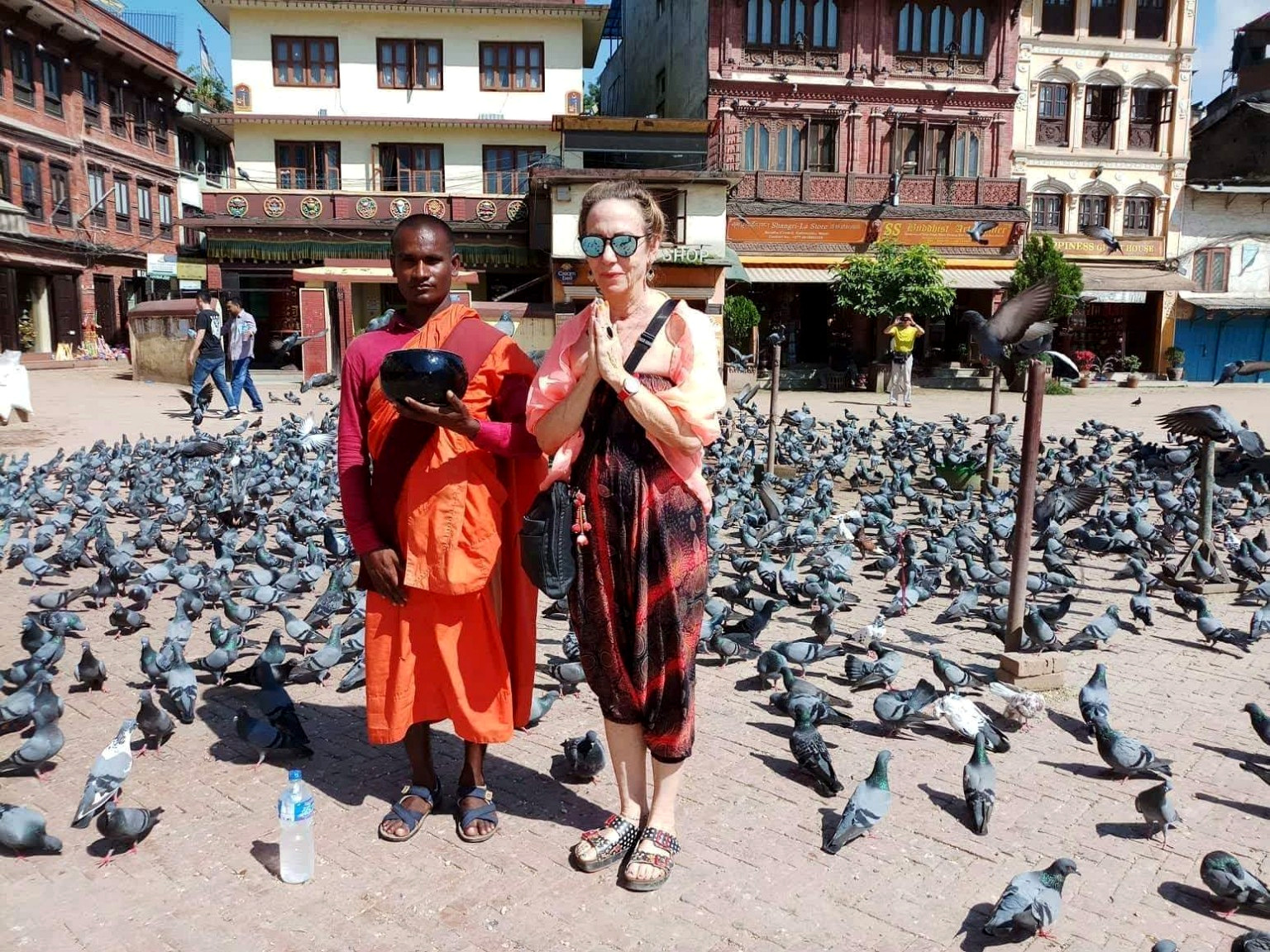
Durante todo el día, la gente caminaba en círculo, en el sentido de las agujas del reloj, alrededor de la enorme estupa, recitando una y otra vez el mantra «Om Mani Padme Hum» y pasando las cuentas de sus rosarios de oración entre los dedos. Al mismo tiempo, por los altavoces de la plaza se escuchaba música religiosa que se mezclaba con las voces de los peregrinos. Entre los mantras, la música y el movimiento constante de personas alrededor de la estupa, se creaba una atmósfera verdaderamente especial. ¡Era fascinante vivirlo día tras día!

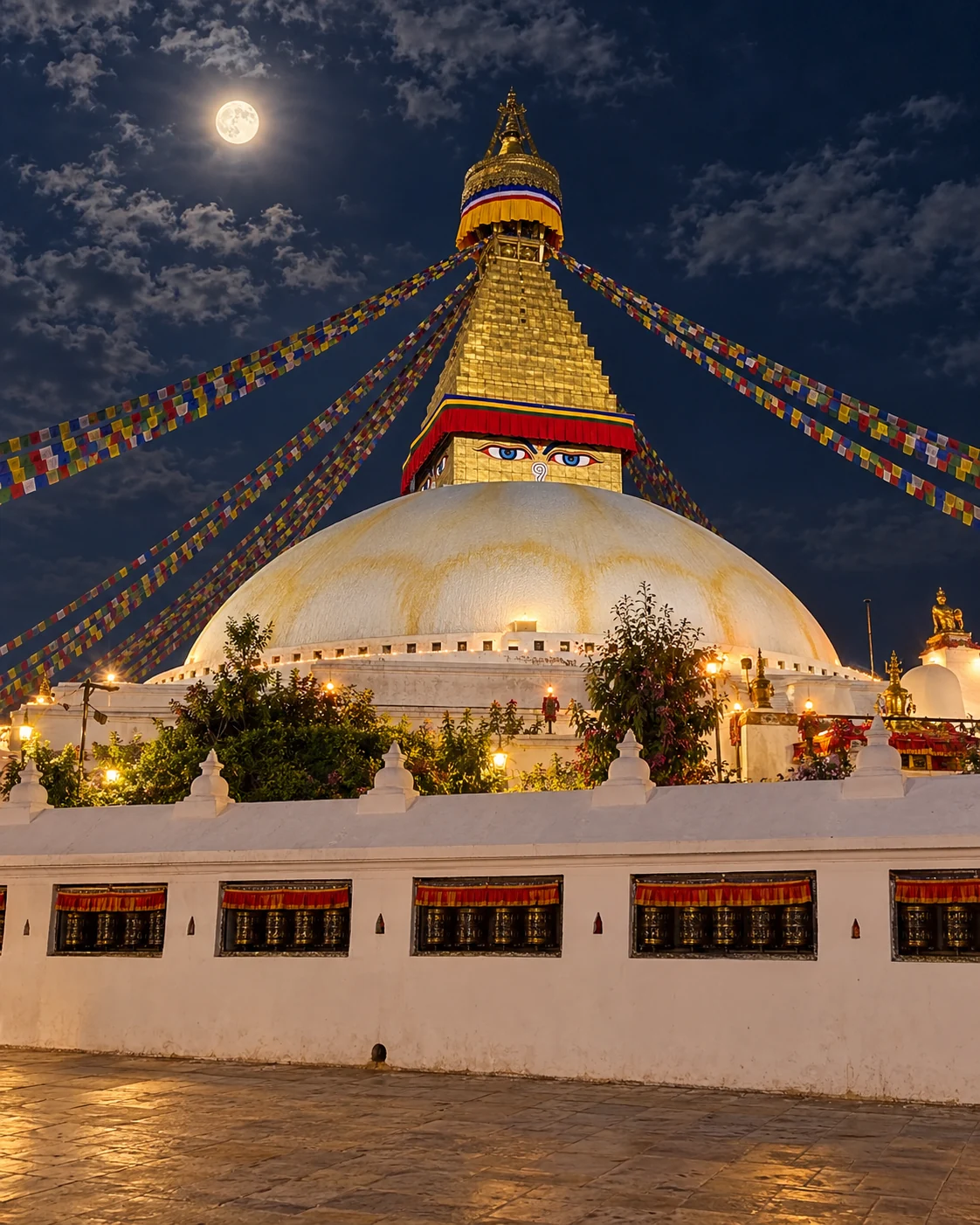
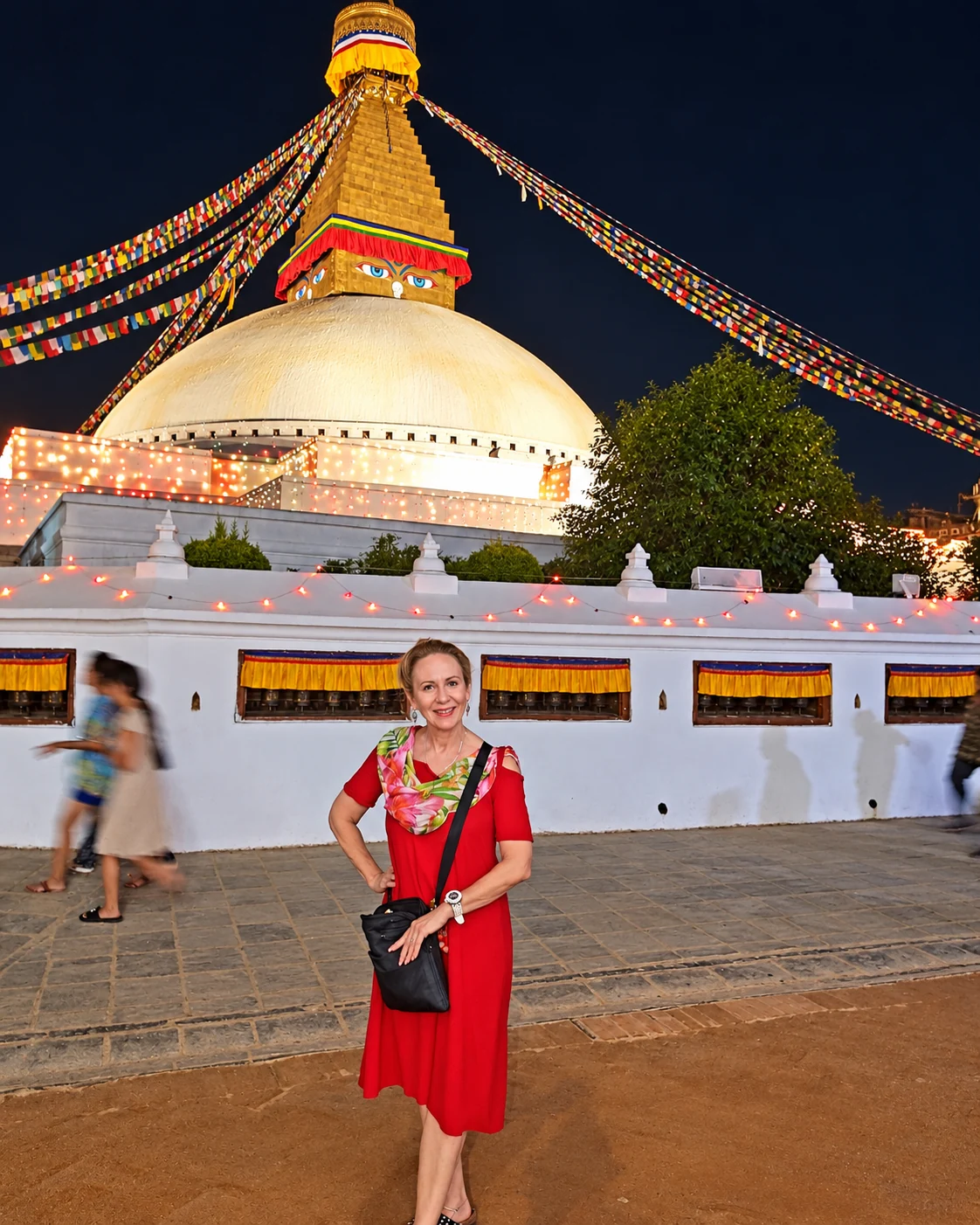
Durante el mes que viví junto a Boudhanath, tuve la oportunidad de observar cómo cambiaban sus colores, sus sonidos y su ambiente desde la mañana hasta bien entrada la noche.
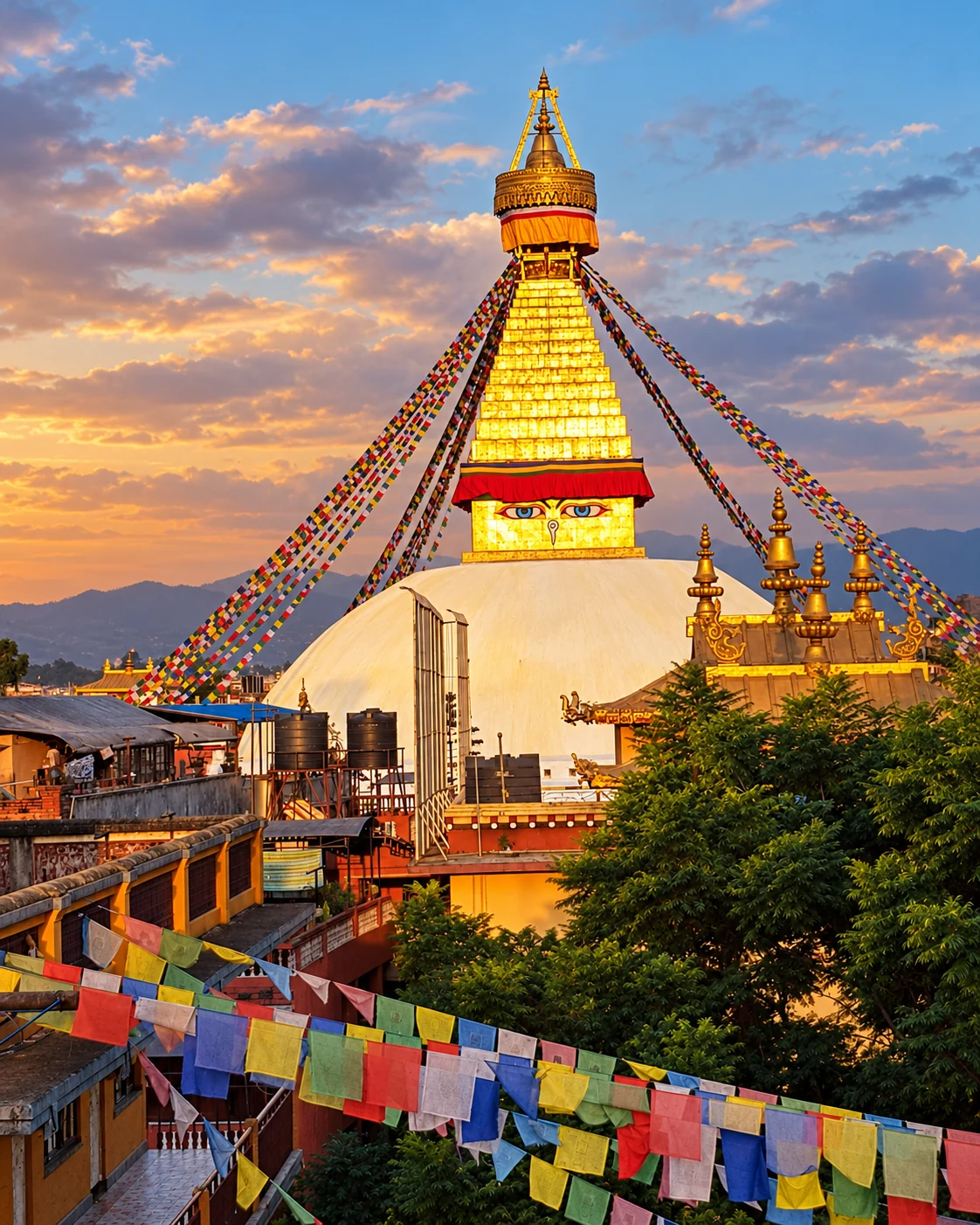
Boudhanath al atardecer.
Junto a Boudhanath por la noche.
Boudhanath iluminada bajo la luna.

En los alrededores de Boudhanath había numerosas galerías de arte. En una de ellas compré ocho mandalas originales, pintados, según me explicaron, por monjes budistas con más de diez años de experiencia en esta tradición. Los pigmentos se preparaban moliéndolos a mano y los detalles dorados se realizaban, según me contaron, con oro de 24 quilates. Los artistas seguían estructuras y temas tradicionales, pintados con extraordinaria precisión y una infinidad de detalles minúsculos. Firmaban sus obras: no eran simples reproducciones decorativas, sino auténticas obras de arte. ¡Preciosas! Me los llevé a Europa, donde vendí cinco. Conservé dos, que hice enmarcar para mi casa, y todavía tengo uno pequeño sin vender.
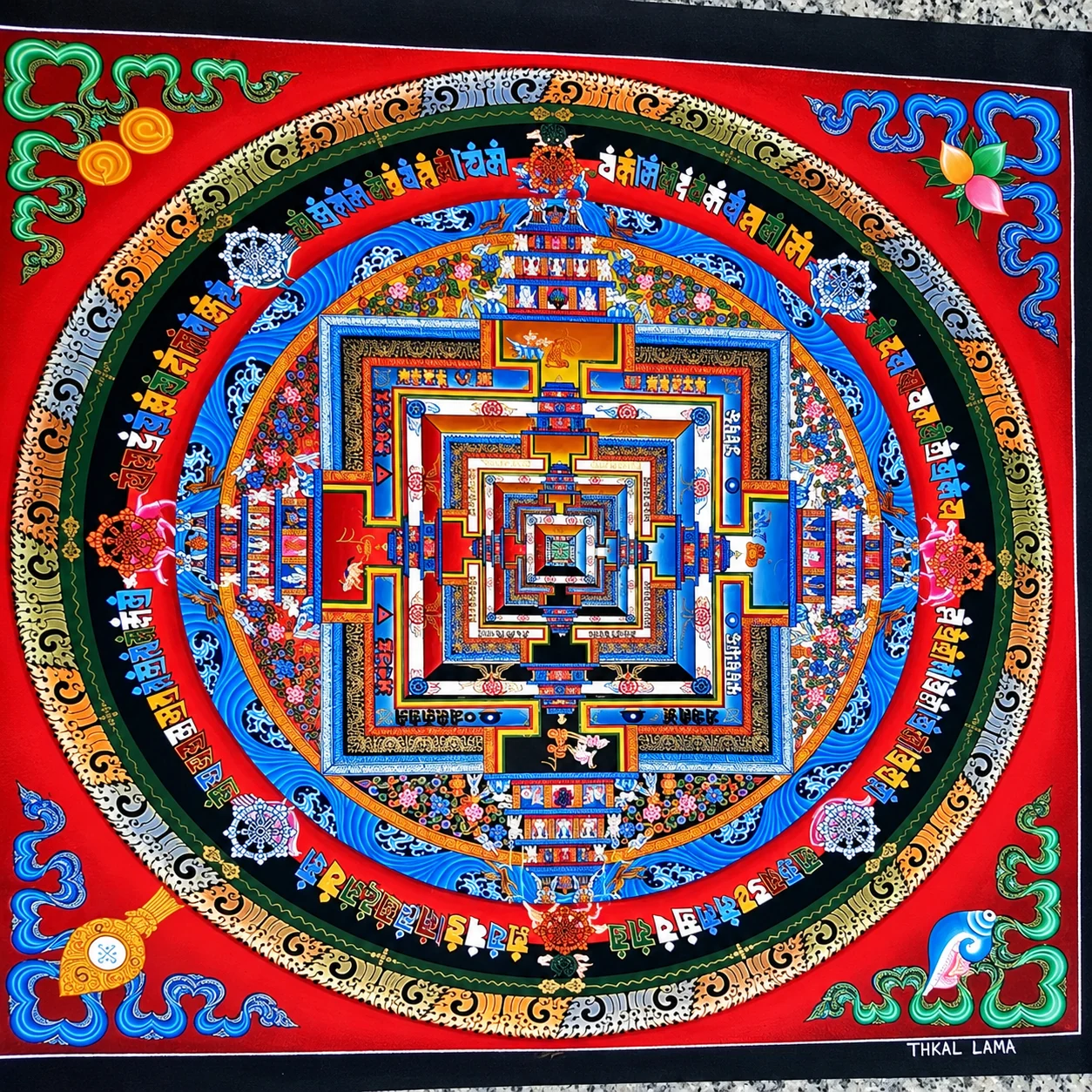
Mandala original comprado en Boudhanath en 2018. Imagen recuperada de una captura de pantalla.

Por supuesto, el barrio no tenía de todo, pero lo que no había decidí que ya no me hacía falta.

El hotel estaba junto a un monasterio de niños, y desde allí podía seguir el ritmo de su vida cotidiana: los mantras, los juegos, las comidas, las lecciones, la hora de acostarse…

En otra ocasión visité un monasterio budista diferente, donde pude fotografiar a los pequeños monjes. Según me explicaron, las mujeres no debíamos tener contacto físico con ellos, una costumbre que había que conocer y respetar.

Soy una viajera totalmente atípica y no convencional. Mi norma es encontrar un alojamiento con cocina y «vivir como una nativa».

En Boudhanath encontré algo que valoro especialmente cuando viajo: la oportunidad de observar y participar, en la medida de lo posible, en la vida cotidiana de un lugar, en vez de limitarme a visitarlo como turista.

Mi guía y amigo en Nepal: Amar Lama me ayudó a descubrir Kathmandu y comprender mejor la vida local.
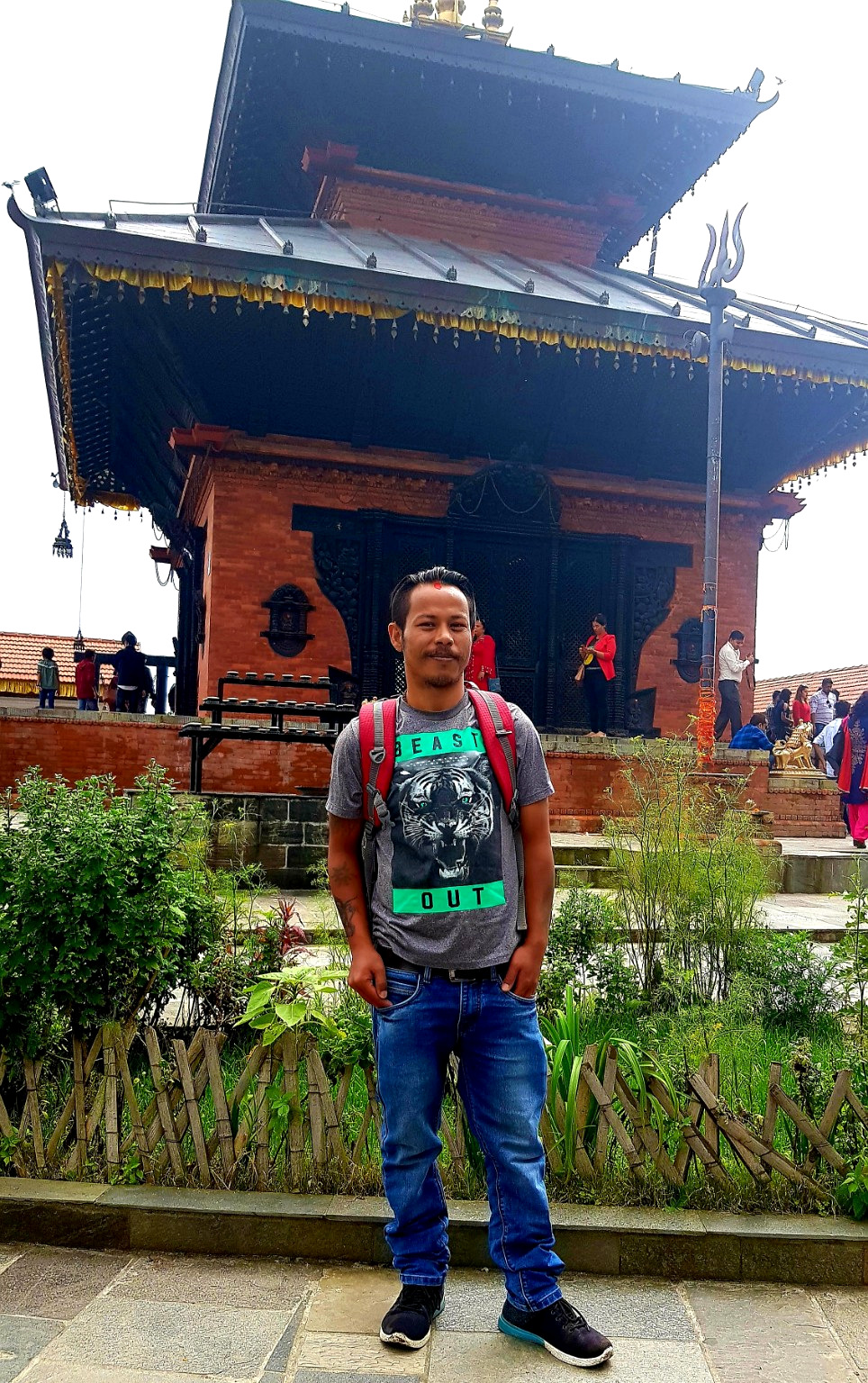
Amar Lama, mi guía y amigo en Nepal.
Amar Lama, mi guía y amigo en Nepal. Si quieres consultar sus servicios como guía, puedes buscarlo en Facebook (contacto solo en inglés).

Moverse por Kathmandu y descubrir sus alrededores

Aunque disfrutaba enormemente de la vida en Boudhanath, desplazarse por Kathmandu era otra historia.

Como ya he contado, no soy especialmente aficionada a caminar, y mucho menos por calles llenas de baches, polvo, barro y un tráfico aparentemente caótico. Por suerte, Amar me conocía bien y sabía cómo ayudarme a desenvolverme en aquel entorno.

Nos desplazábamos siempre en taxi. Con aquellas calles y aquel tráfico, prefería reservar las caminatas para otros lugares.
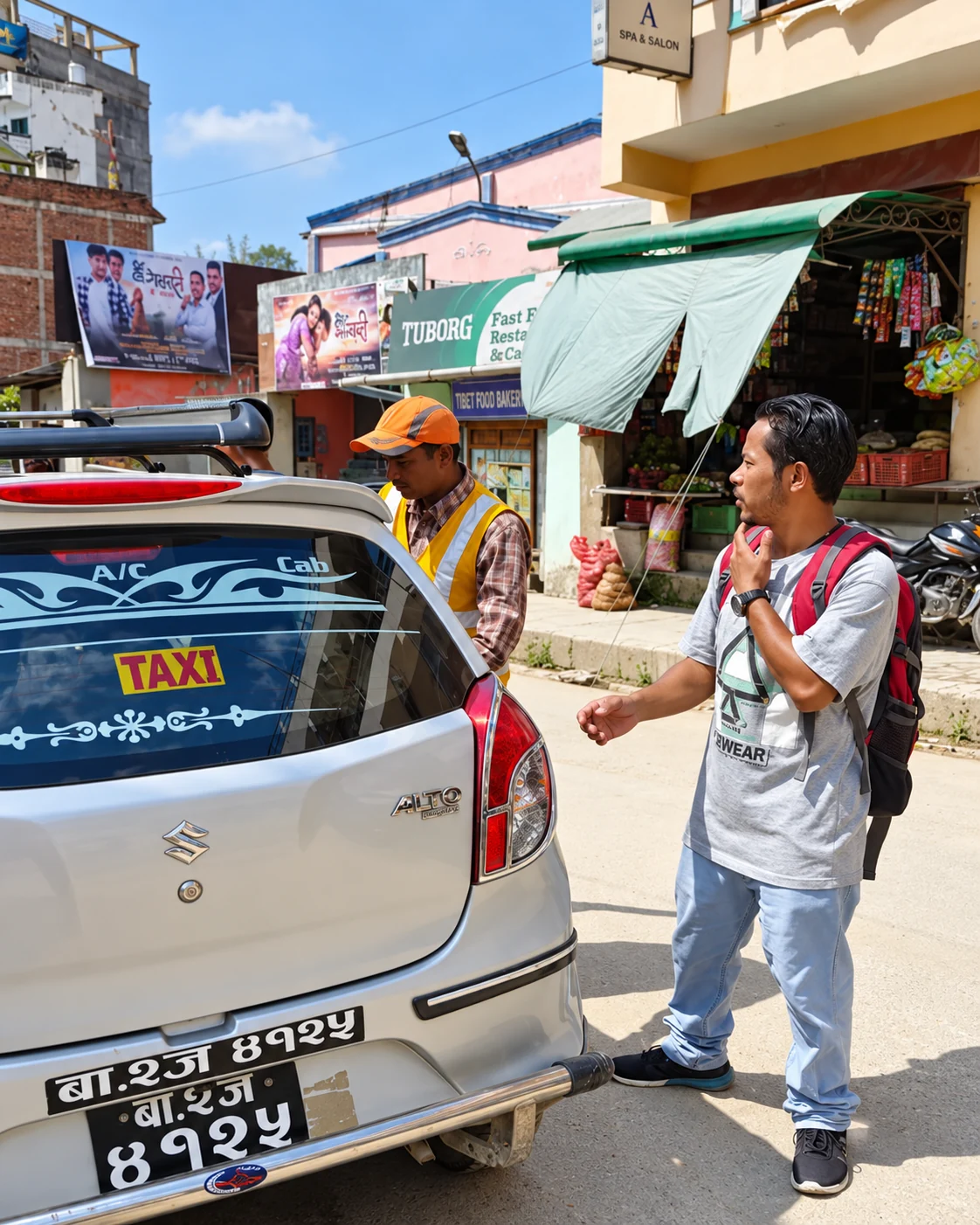
Amar Lama, mi guía y amigo en Nepal, junto a un taxista y el taxi en Katmandú.

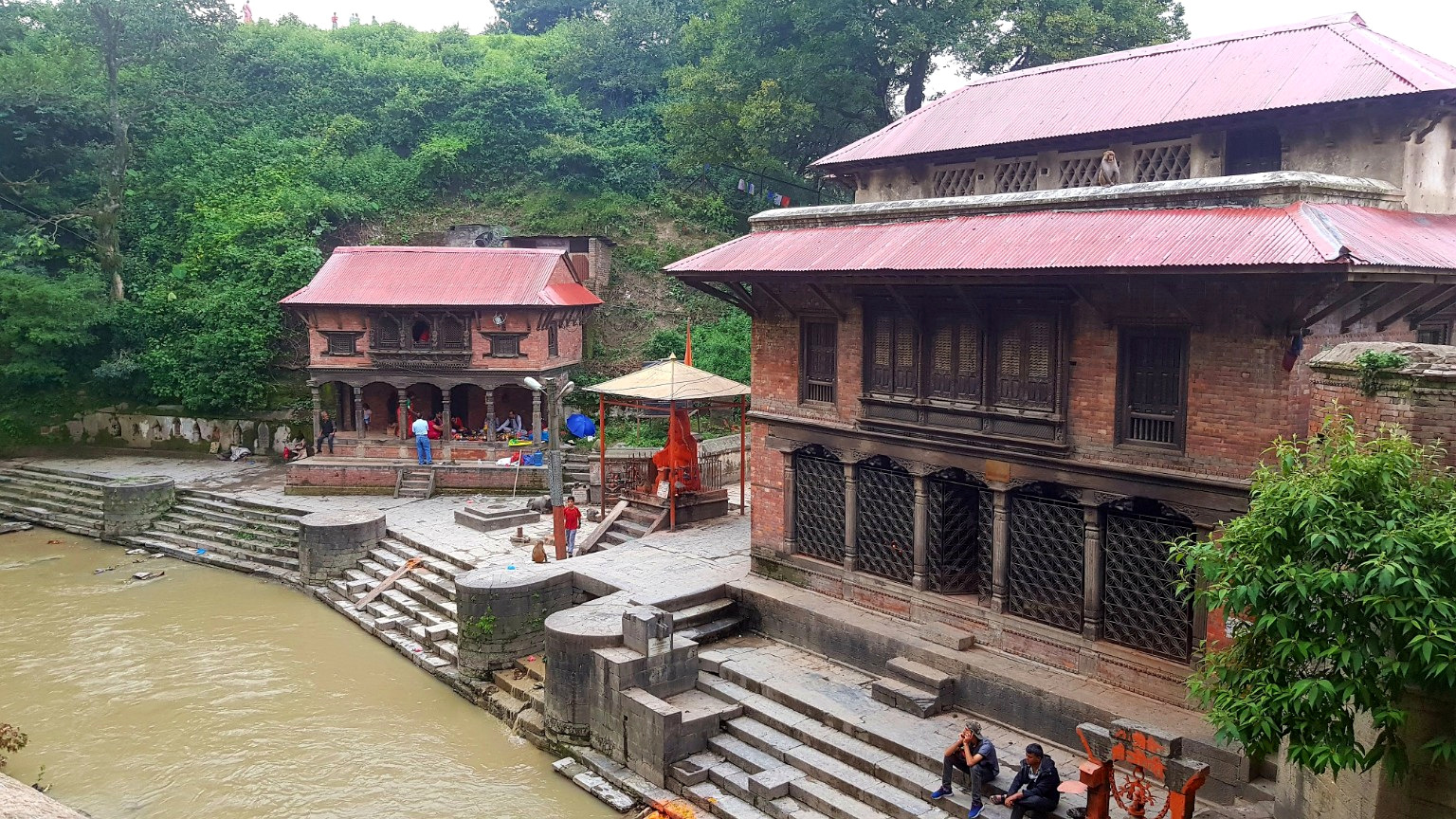
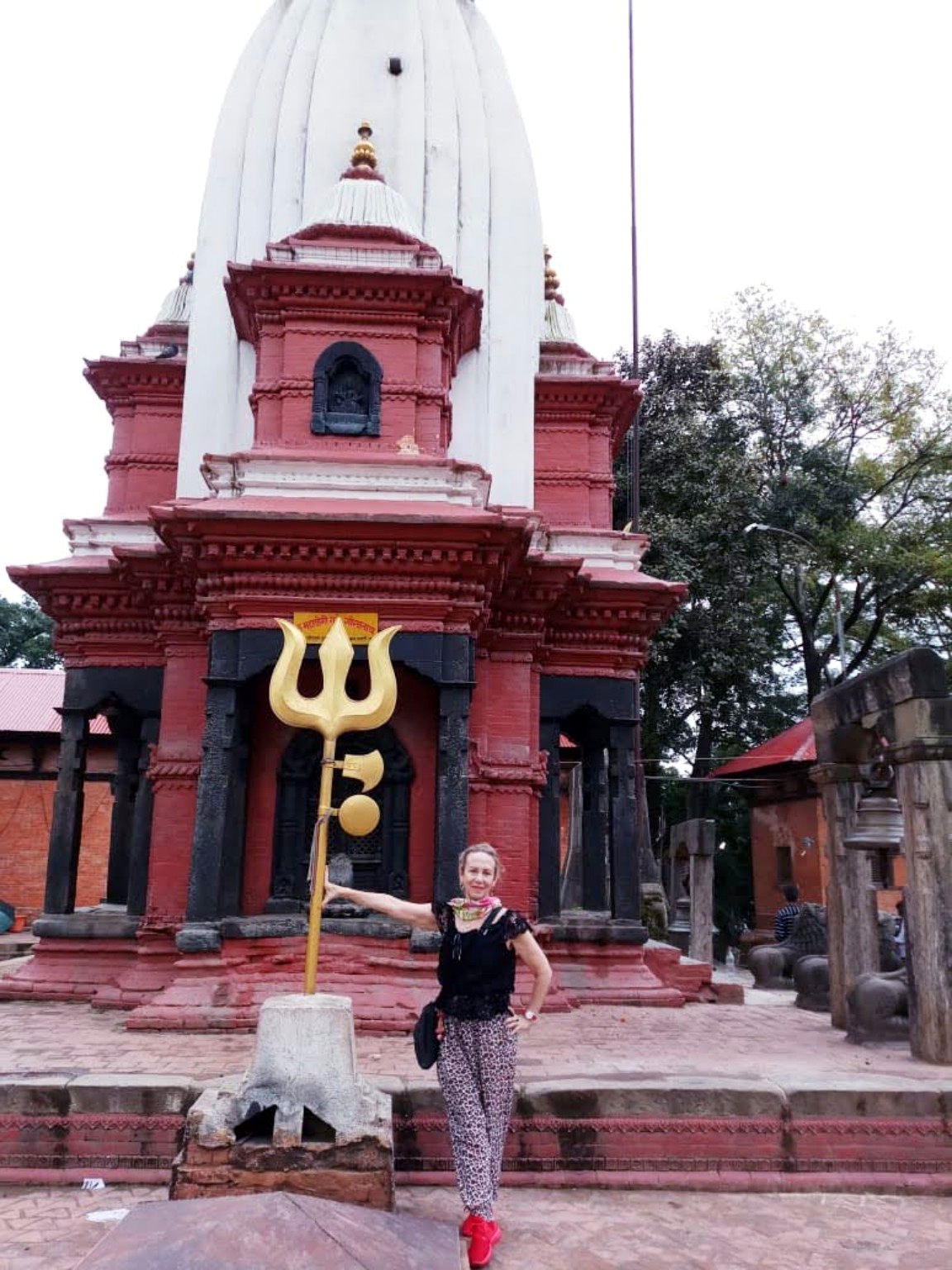
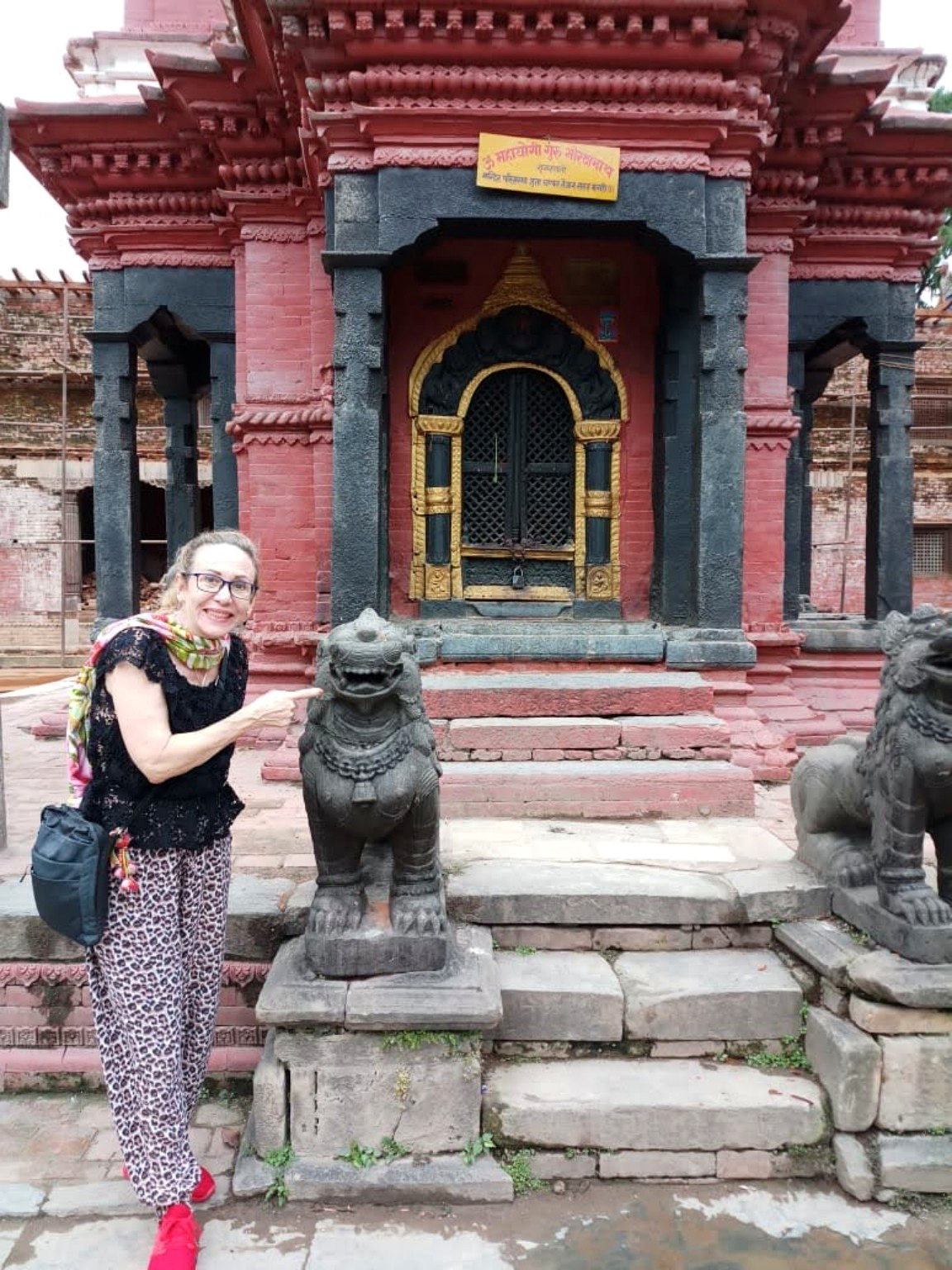
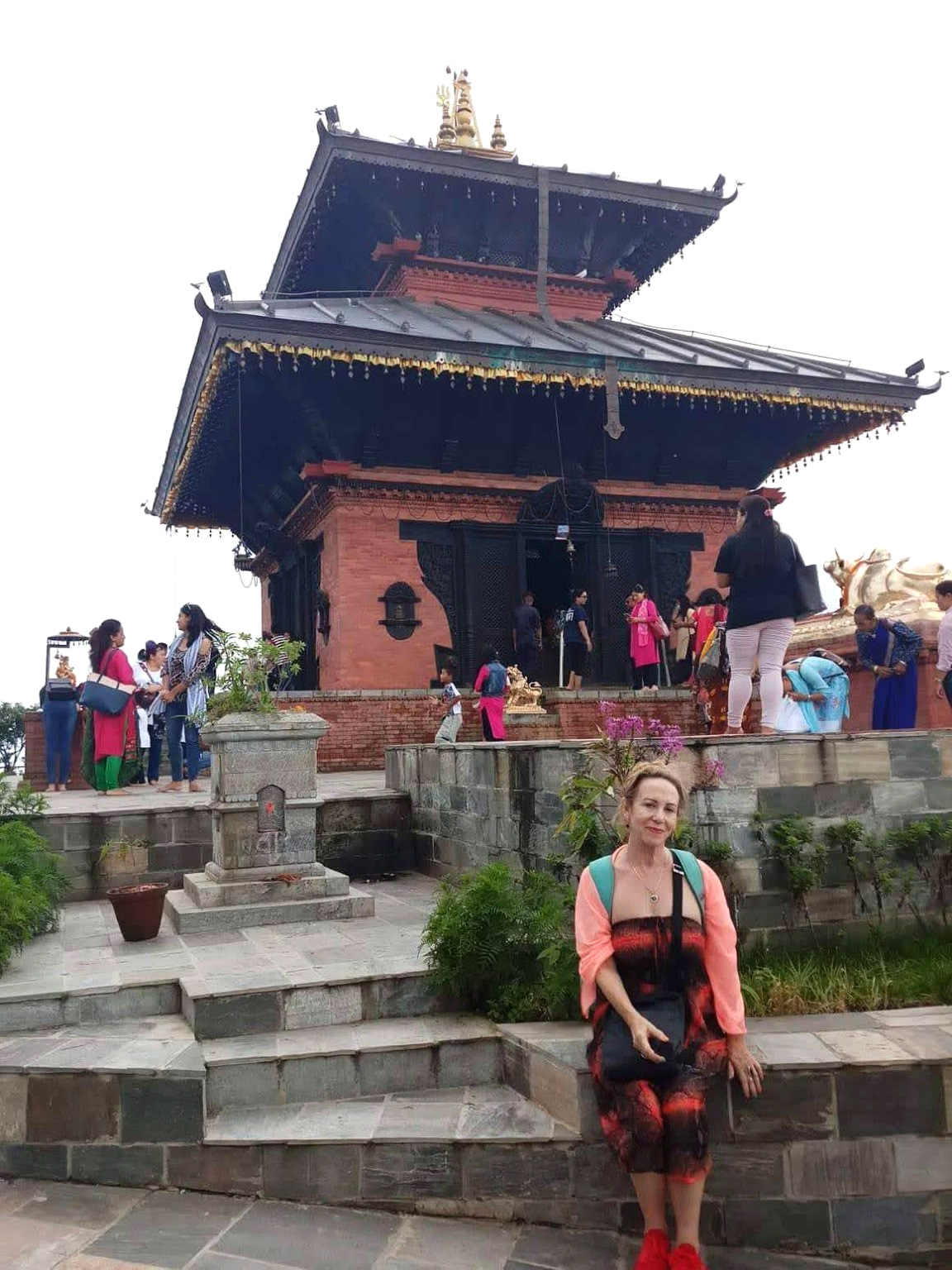
Sin embargo, pude conocer lugares extraordinarios del valle de Kathmandu. Durante mi estancia visité los siete conjuntos monumentales que forman parte del sitio Patrimonio Mundial de la UNESCO denominado Valle de Kathmandu: las plazas Durbar de Kathmandu, Bhaktapur y Patan; las estupas budistas de Swayambhunath, también conocida como el Templo de los Monos, y Boudhanath; y los templos hinduistas de Pashupatinath y Changu Narayan.

Cada lugar tenía su propio carácter, y me impresionaba la convivencia de las tradiciones hinduistas y budistas en la vida cotidiana.

Salvo en Swayambhunath, no encontraba tantos animales sueltos como en la India. De vez en cuando aparecía un mono, una vaca o una cabra, pero no era algo que viera todos los días.

Por otra parte, Kathmandu me pareció una ciudad bastante segura durante mi estancia, aunque con poca vida nocturna. La gente seguía en gran medida el horario del sol. Muchos restaurantes cerraban hacia las nueve de la noche y me dijeron que incluso en Thamel, el barrio turístico, los bares y las discotecas cerraban relativamente temprano.

También había otros lugares que me habría gustado conocer. No llegué a visitar Lumbini, el lugar de nacimiento de Buda, ni Pokhara, conocida por sus vistas del Himalaya. Los desplazamientos por carretera podían resultar largos y agotadores, y preferí no aventurarme a realizar esos viajes.

Además, el polvo y la contaminación terminaron pasándome factura. Me resfrié más de una vez, algo que no me había ocurrido en cinco años. ¡Y eso que tengo un sistema inmunológico muy fuerte!

Pero todo tiene un límite. Nepal me recordó que incluso cuando disfrutamos de una experiencia extraordinaria debemos reconocer nuestras necesidades y respetar nuestros límites físicos.

Al fin y al cabo, viajar a mi manera no consiste en verlo todo ni en cumplir un itinerario turístico. Consiste en elegir cómo quiero vivir la experiencia, aprender de lo inesperado y aprovechar verdaderamente el tiempo que paso en cada lugar.

Y en Kathmandu, después de tantos trayectos en taxi que parecían sesiones de centrifugado, ¡también aprendí que no hace falta practicar deportes de aventura para vivir emociones fuertes!

La comida, las costumbres y las sorpresas

La comida en Nepal fue excelente. Encontré productos frescos, de temporada, muchas verduras y una extraordinaria variedad de especias.

Me llamó la atención la forma de distribuir la leche, transportada en recipientes metálicos directamente desde los lugares de producción, así como la presencia de hierbas, aceites, inciensos, mantras y remedios ayurvédicos relacionados con las tradiciones que había conocido durante mis viajes por la India.

Antes de viajar a Rishikesh, una ciudad santa de la India, había oído que el alcohol estaba estrictamente prohibido y que la alimentación era predominantemente vegetariana. Así que, todavía en España, decidí prepararme mentalmente para ese cambio de hábitos.

Todos los días me repetía un mantra: «Dieta basada en plantas, dieta basada en plantas». Era mi manera de mentalizarme para una forma diferente de comer y beber.

Y funcionó. Cuando llegué a Rishikesh, descubrí que aquellas costumbres no eran tan estrictas ni universales como me habían contado, pero mi preparación había dado resultado. Me adapté sin ninguna dificultad.

Durante algunos meses seguí una alimentación vegetariana y sentí que mi vibración personal era definitivamente más alta.

Y ocurrió algo curioso. Después empecé a ver constantemente vídeos de rescate de perros en YouTube y a sentir una compasión cada vez mayor por los animales. Lo sorprendente, para mí, fue que ese sentimiento apareció después del cambio de dieta, y no antes, como suele contarse.

Recibí también comentarios curiosos sobre mis viajes. Algunas personas se preguntaban por qué los niños se vestían de determinada manera; otras, al ver mis fotografías, se sorprendían de que apareciera tan feliz y sonriente en lugares que imaginaban mucho más difíciles o desagradables.

Aprender también significa conocer nuestros límites

He sido muy feliz durante mis viajes. Y la felicidad, como ya se sabe, es una actitud.

Estoy aprendiendo siempre y ¡las sincronicidades me motivan y entusiasman!

Pero viajar también me ha enseñado a conocerme mejor, a confiar en mi propio criterio y, sobre todo, a poner límites.

Una GRAN lección que aprendí durante aquel viaje fue que no podía fiarme ciegamente de las opiniones y recomendaciones que encontraba en Internet. Investigué muchísimo, pero descubrí que las experiencias de unas personas y otras pueden ser como la noche y el día. Cada cual tiene sus propias expectativas, preferencias y perspectivas. Además, detrás de algunas recomendaciones también puede haber intereses comerciales.

Por ejemplo, confié en BookYogaRetreats.com y acepté su sugerencia de un curso de yoga en Rishikesh, India, que estuvo muy por debajo de lo prometido.

Así aprendí que el yoga, la meditación y la espiritualidad también son un GRAN negocio en Rishikesh.

Mi método consiste en leerlo todo, investigar y mantener la mente abierta. Pero también me conozco a mí misma y sé que tengo que PONER LÍMITES.

No es no.

Hay que aprender a ser flexible, pero también a decir que no cuando las circunstancias lo requieren. De lo contrario, podemos acabar pagando precios turísticos por condiciones que no estamos dispuestos a aceptar.

Necesito cierto nivel de comodidad, especialmente cuando viajo a lugares donde la vida cotidiana presenta mayores dificultades. Por ejemplo, ¡que no me den una habitación llena de insectos!

Tampoco me atrae especialmente la vida de cinco estrellas, porque a veces me parece una jaula dorada.

Lo mío es el zen y la limpieza.

Con los años he aprendido que adaptarse a otra cultura no significa renunciar a las propias necesidades ni aceptar cualquier situación. Para mí, la verdadera libertad de viajar consiste también en poder decidir cómo quiero vivir cada experiencia.

Un cambio de planes inesperado

Cuando terminé mi estancia en Nepal, tenía previsto continuar hacia Sri Lanka. Pero entonces recibí una llamada de un colega en Cuba que me ofrecía impartir cursos de masaje tailandés.

¡Otro cambio de planes!

Para viajar a Cuba tenía que regresar primero a Madrid y tramitar el visado. Busqué vuelos por Internet y, casi a última hora, encontré uno directo de Kathmandu a Madrid por unos 350 dólares. ¡Increíble!

Lo interpreté como una señal. En lugar de continuar hacia Sri Lanka, regresé a Madrid, hice los trámites y emprendí el viaje a Cuba, donde pasé dos meses enseñando masaje tailandés.

Y pensar que, cuando llegué a Nepal, tampoco había planeado visitar aquel país…

Así es mi manera de viajar: una experiencia abre la puerta a otra, muchas veces sin que sepamos de antemano adónde nos llevará.

Lo que me dejó Nepal

Al recordar mi estancia en Nepal, pienso en todo lo que aprendí, en las personas que conocí y en las experiencias que nunca habría vivido siguiendo un itinerario turístico convencional.

Una vez más, descubrí que viajar no consiste en verlo todo, sino en vivir plenamente aquello que encontramos por el camino. Y que, muchas veces, lo inesperado termina siendo lo más enriquecedor.

Así es mi manera de viajar.

Transformative journeys · Nepal

Nepal: Learning, Living, and Travelling Differently

A month in Boudhanath and a journey of unexpected encounters

Boudhanath by day, framed by a window in a nearby building. Nepal, 2018.

My Personal Formula for Travelling Six Months a Year

One of my passions is educational and transformative travel. For years I have travelled about six months annually, following a personal formula that lets me support myself on the road: I spend the same, or even less, than I would at home.

My secret is to live modestly, close to local people, and stay relatively long periods. At the time, I budgeted around $400 a month for accommodation and negotiated the rent according to the length of my stay.

Once settled, I study or teach courses where you learn primarily by doing, without heavy academic demands: dance, massage, yoga, cooking, natural medicine, tai chi, languages… And along the way, almost without trying, I do a little cultural sightseeing.

For me, travel isn't simply about visiting places. It's about learning through practice, spending time with local people, and discovering other ways of thinking and living. Over the years, I've made relatively few friends on my travels, but some very good ones. I've learned so much from them: their ways of seeing and living life, their stories and customs, and their practical knowledge of where to go, where to shop, what to eat, and how to navigate everyday life. Speaking the language—or at least trying to learn it—has always helped me form these relationships.

That's why I prefer longer stays. Genuine cultural immersion takes time, curiosity, and a willingness to overcome initial difficulties. It's not enough to say we want to integrate: we have to be prepared to encounter ways of life that may seem strange, even intimidating, at first. Once we get past that barrier, however, a whole world of experiences and learning opens up, something a conventional tourist visit can scarcely offer.

In summer and autumn 2018, I travelled through Thailand, India, and Nepal. My September stay in Nepal happened unexpectedly, almost on impulse, and became a fine example of how my own approach to travel works.

When I wrote the original article in February 2019, I was in Cuba, invited by the Therapeutic Department of OMAM (World Martial Arts Organization) to teach two Thai massage courses to 35 practitioners and students.

When I'm not working, I tend to choose countries in Southeast Asia or Latin America where, in those days, I could live more economically than in Europe or the United States.

Nepal: An Unexpected Destination

Nepal is a country that doesn't disappoint. I came away with so many images and experiences etched into my memory—things that had never especially attracted me before, vast and fascinating as the world is.

See my travel photo album →

In September 2018 I was in Rishikesh, India, taking an Ayurveda course when I had to leave the country because of my visa. Nepal was the nearest destination, and as if it were a sign, everything fell wonderfully into place. So off I went! I obtained my visa at the airport.

Ironically, I'm not your typical trekking tourist, much less a backpacker. Far from it! I was born in California, where people drive even around the corner, and I've never especially liked walking.

I usually travel alone to places far from my home in Madrid, staying at least a month. I'm an independent traveller, a bit of a digital nomad, a Thai massage teacher, and an educational-travel entrepreneur… among other things.

By then, I had already been travelling about six months a year for ten years. Nepal was the 42nd country I'd visited.

Although I greatly value material comforts—beauty, cleanliness, comfort—I also feel a powerful attraction to intellectual and spiritual experiences. Let's say I seek the realities beneath appearances.

In Nepal I found adventures, beauty, and depth everywhere. But oh dear! You need to be reasonably fit and ready for adventure to visit this country. Even walking or crossing the street can become quite an experience! Ha, ha, ha!

People have asked whether I'd recommend visiting Nepal with children. Based on my own experience at the time, my answer was no. Definitely not!

Kathmandu: Between Spirituality and Everyday Chaos

In Kathmandu, the capital, spirituality seems present everywhere. It's extraordinary because in the West we sometimes appear almost to deny that it's even a dimension of being human. There, however, you can feel that energy whether you're remotely religious or not.

On the other hand, everyday life can be difficult and, as the saying goes, all that glitters is not gold.

Nepal is a country of extraordinary contrasts and a fascinating blend of cultures, including Nepali, Tibetan, and Newar traditions. Kathmandu's traffic caught my attention immediately. I could scarcely find traffic signs, many streets had no visible names, and pavements were almost nonexistent. At first the traffic seemed so chaotic that I actually asked the driver which side of the road they were supposed to use!

The streets looked as though a bomb had fallen—or, more realistically in Nepal, an earthquake. There were rocky roads, barely paved stretches, potholes, puddles, mud, and dust everywhere. Rain turned some areas into quagmires, and when things dried out the dust returned. Walking, crossing the street, or simply moving around the city could be an adventure in itself.

And yet amid these difficulties were extraordinary surprises.

I was struck by the number of cars and motorcycles, flat-screen televisions, latest-generation mobile phones, photocopy shops, and small businesses. And to top it all, I even visited a restaurant served by robots made in Nepal!

Meeting a robot server at Naulo Restaurant, Kathmandu, 2018. Photograph recovered from an original screenshot.

Imagine that: amid all those potholes, mud, and dust, they were making robots!

Boudhanath: Living Within Another Culture

My arrival in Kathmandu wasn't exactly wonderful. I'd booked accommodation online in Thamel, the tourist quarter, but when I arrived it was a rather unpleasant place, far below my expectations. A complete disaster!

Fortunately, Amar (pronounced “Omar”), a Nepali who became both my guide and my friend, quickly realized that I wouldn't be happy in noisy, confusing Thamel. After one night in that place, he found me a wonderful hotel beside the great Boudhanath stupa, barely a two-minute walk away.

What a difference! The hotel was very good, and I stayed there for a whole month.

I thank heaven that I lived in that beautiful neighbourhood. Boudhanath, one of Nepal's most important centres of Tibetan Buddhism, became the centre of my daily life.

All day long, people walked clockwise around the enormous stupa, reciting “Om Mani Padme Hum” again and again while passing prayer beads through their fingers. At the same time, religious chanting and music sounded from loudspeakers around the square, mingling with the voices of the pilgrims. The mantras, the music, and the constant movement created an extraordinary atmosphere. What a privilege to experience it day after day!

During that month living beside Boudhanath, I was able to watch its colours, sounds, and atmosphere change from daytime to late at night.

Boudhanath at dusk.
Boudhanath at dusk.
At Boudhanath at night.
Boudhanath illuminated under the moon.

Numerous art galleries surrounded Boudhanath. In one I bought eight original mandalas. As I was told, they were painted by Buddhist monks with more than ten years' experience, using hand-ground pigments and details in 24-karat gold. The compositions followed traditional patterns and themes, executed with extraordinary precision and countless tiny details, and the artists signed their work. These weren't cheap decorative prints, but beautiful works of art. I brought all eight to Europe, sold five, had two framed for my home, and kept one small one.

Original mandala purchased at Boudhanath in 2018. Image recovered from a screenshot.

Of course, the neighbourhood didn't have everything, but I decided that what it lacked I no longer needed.

The hotel was beside a children's monastery, and from there I could follow the rhythm of the children's daily lives: the mantras, games, meals, lessons, bedtime… On another occasion I visited a different Buddhist monastery and photographed the young monks. I was told that women should not have physical contact with them, a custom to learn and respect.

I'm a thoroughly atypical, unconventional traveller. My rule is to find accommodation with a kitchen and “live like a local.”

In Boudhanath I found something I value particularly when travelling: the chance to observe and participate, as far as possible, in the everyday life of a place instead of merely passing through as a tourist.

My guide and friend in Nepal: Amar Lama helped me explore Kathmandu and understand local life.

Amar Lama, my guide and friend in Nepal.
Amar Lama, my guide and friend in Nepal. If you are planning a trip to Nepal and would like to inquire about his guiding services, you can look for Amar Lama on Facebook (English only).

Getting Around Kathmandu and Exploring the Valley

As much as I loved life in Boudhanath, getting around Kathmandu was another story.

As I've said, I'm not fond of walking, especially not through streets full of potholes, dust, mud, and seemingly chaotic traffic. Fortunately Amar understood me and knew how to help me navigate the surroundings.

We always travelled by taxi. With those streets and that traffic, I preferred to save my walks for other places.

Amar Lama, my guide and friend in Nepal, with a taxi driver and the taxi in Kathmandu.

Still, I discovered extraordinary sites throughout the Kathmandu Valley. I visited all seven monument zones in the UNESCO World Heritage property: Kathmandu, Bhaktapur, and Patan Durbar Squares; the Buddhist stupas of Swayambhunath (the Monkey Temple) and Boudhanath; and the Hindu temples of Pashupatinath and Changu Narayan.

Each had its own character, and I was struck by the coexistence of Hindu and Buddhist traditions in everyday life.

Except at Swayambhunath, I didn't see as many animals roaming freely as in India. There might be a monkey, a cow, or a goat now and then, but not every day.

Kathmandu felt quite safe to me during my stay, although nightlife seemed limited. People largely followed the rhythm of daylight. Many restaurants closed around nine, and I was told that even bars and discos in touristy Thamel shut relatively early.

There were other places I would have liked to see. I didn't make it to Lumbini, the birthplace of Buddha, or to Pokhara, known for its Himalayan views. Road journeys could be long and exhausting, and I chose not to undertake them.

The dust and pollution took their toll, too. I caught colds more than once, for the first time in five years. And I have a very strong immune system! But everything has its limits. Nepal reminded me to respect my physical needs, even when I'm enjoying an extraordinary experience.

In the end, travelling my way isn't about seeing everything or completing a tourist itinerary. It's about choosing how I want to live an experience, learning from the unexpected, and making the most of the time I spend somewhere.

And in Kathmandu, after so many taxi rides that felt like spin cycles in a washing machine, I also learned that you don't need adventure sports to get your share of thrills!

Food, Customs, and Surprises

The food in Nepal was excellent. I found fresh, seasonal produce, plenty of vegetables, and an astonishing range of spices.

I was struck by the way milk was distributed in metal containers from the producers, and by the herbs, oils, incense, mantras, and Ayurvedic remedies related to traditions I had encountered in India.

Before leaving for Rishikesh, a holy city in India, I'd heard that alcohol was strictly forbidden and vegetarian food was the norm. So while still in Spain I decided to prepare myself mentally for a change in habits.

Every day I repeated a mantra to myself: “Plant-based diet, plant-based diet.” It was my way of getting ready for a different way of eating and drinking.

And it worked. Once I reached Rishikesh I discovered the customs weren't as strict or universal as I'd been told, but my preparation had paid off. I adapted with no difficulty.

I followed a vegetarian diet for several months and felt that my personal vibration was definitely higher.

Something curious happened, too. I began watching dog-rescue videos on YouTube constantly and feeling a growing compassion for animals. What surprised me was that the feeling followed the change in diet rather than causing it, as people so often say.

I also received some curious comments about my travels. Some people wondered why the children dressed as they did; others, seeing my pictures, were surprised that I looked so happy and smiling in places they imagined to be far more difficult or unpleasant.

Learning Also Means Knowing Your Limits

I have been very happy on my travels. And happiness, as everyone knows, is an attitude.

I'm always learning, and synchronicities excite and motivate me!

But travel has also taught me to know myself better, trust my own judgement, and above all set boundaries.

One BIG lesson of that trip was that I couldn't blindly trust the opinions and recommendations I found online. I researched extensively, but realized that different people's experiences could be as different as night and day. Everyone has their own expectations, preferences, and perspectives. And sometimes there are commercial interests behind recommendations.

For example, I trusted BookYogaRetreats.com and accepted its suggestion for a yoga course in Rishikesh, India, which fell far below what had been promised.

That taught me that yoga, meditation, and spirituality are also BIG business in Rishikesh.

My approach is to read everything, research, and keep an open mind. But I also know myself, and I know I need to SET LIMITS.

No means no.

We need to learn to be flexible, but also to say no when circumstances call for it. Otherwise, we can end up paying tourist prices for conditions we're unwilling to accept.

I need a certain degree of comfort, particularly in places where everyday life poses greater challenges. For instance, don't give me a room full of insects!

Nor am I especially drawn to five-star luxury, which can sometimes feel like a gilded cage.

My ideal is zen and cleanliness.

Over the years I've learned that adapting to another culture doesn't mean abandoning your own needs or accepting every situation. For me, the real freedom of travel also means being able to decide how I want to experience it.

An Unexpected Change of Plans

When I finished my stay in Nepal I had planned to continue to Sri Lanka. But then a colleague in Cuba called to offer me the opportunity to teach Thai massage courses.

Another change of plans!

To travel to Cuba, I first needed to return to Madrid and arrange my visa. I searched online and, almost at the last minute, found a direct flight from Kathmandu to Madrid for about $350. Incredible!

I took it as a sign. Instead of continuing to Sri Lanka, I returned to Madrid, completed the paperwork, and went to Cuba, where I spent two months teaching Thai massage.

And to think that when I first arrived in Nepal, I hadn't planned to visit that country either…

That's how I travel: one experience opens a door to another, often without our knowing beforehand where it will lead.

What Nepal Left Me With

When I look back on my time in Nepal, I think of everything I learned, the people I met, and the experiences I would never have had if I had followed a conventional tourist itinerary.

Once again, I discovered that travel is not about seeing everything, but about fully experiencing what we find along the way. And so often, the unexpected turns out to be the most enriching part.

That is my way of travelling.